
A hydraulic cylinder is a linear actuator that converts hydraulic pressure energy into mechanical force and motion. Widely known as the “muscle” of hydraulic systems, it pushes, pulls, lifts or tilts heavy loads for all types of machinery.
How Does a Hydraulic Cylinder Work?
The core principle is simple: Pascal’s law. Pressurized hydraulic oil enters the cylinder barrel, acting on the piston surface. The pressure difference creates thrust, driving the piston and connected rod to produce linear movement.
When oil feeds into the cap end, the rod extends out. When oil flows into the rod end, the piston retracts back. By switching the oil flow direction, engineers control forward and backward movement. This fundamental physical rule governs nearly all fluid power systems used in heavy-duty equipment. You can read more about Pascal’s principle on the official Britannica definition page.
Main Components of a Hydraulic Cylinder
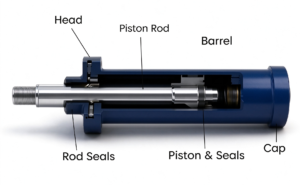
- Cylinder Barrel The main tube body, usually made from precision honed tube. Its inner surface finish directly impacts sealing performance and service life. Poor surface quality will accelerate seal wear and cause premature oil leakage.
- Piston & Piston Rod The piston separates two oil chambers. The piston rod is chrome-plated to resist wear and corrosion, critical for outdoor and dusty operating environments.
- Seals Critical parts to prevent oil leakage. Different seal materials fit low/high pressure, high temperature or dusty environments. Common seal materials include polyurethane, nitrile rubber and PTFE for extreme working conditions.
- End Caps (Head & Cap End) Seal both ends of the barrel, with ports for hydraulic oil and mounting connections. End caps also bear the full dynamic load when the actuator pushes or pulls.
- Mounting Parts Clevis, flange, trunnion and other fittings for installing the unit onto host equipment. The mounting style changes force distribution and must be selected carefully to avoid bending stress.
Common Types of Hydraulic Cylinders
- Tie-rod hydraulic cylinders: Standard, easy maintenance, for industrial machinery
- Welded hydraulic cylinders: Compact structure, strong load capacity, widely used in construction & agriculture
- Telescopic hydraulic cylinders: Multi-stage design, long stroke in short retracted length, typical for dump trucks
- Single-acting / Double-acting cylinders: Differentiated by oil inlet method. Single-acting versions only push in one direction, returning by external load or spring force. Double-acting designs provide powered motion on both extension and retraction strokes.
Typical Applications
Hydraulic cylinders power heavy equipment across the globe:
- Construction: Excavators, loaders, compactors
- Agriculture: Harvesters, tractors, farm lifting gear
- Waste & sanitation: Garbage compressors, dump trailers
- Port & material handling: Container lifters, lifting platforms
- General industrial automation: Presses, lifting tables
Different industries place unique demands on material selection, coating and sealing packages. For example, marine applications require extra corrosion protection while mining equipment needs reinforced rod surface treatment.
Why Choose ANBAO Hydraulic Cylinders
We produce welded, tie-rod and telescopic units, plus supporting honed tubes and chrome piston rods. Our products pass strict pressure testing before shipment, with ISO9001 & CE certification. We accept custom orders based on your drawings or samples for different working conditions. If you need a custom solution, visit our hydraulic cylinder product page to know more about our manufacturing capability.
Conclusion
Understanding the basics of hydraulic cylinders helps you select the right model for your machine. Many equipment buyers overlook small details like surface roughness or seal compatibility, which often lead to unexpected downtime. If you need technical support or quotation for custom solutions, feel free to contact our engineering team.
References
For further reading on hydraulic principles and industry standards, you may refer to these authoritative resources: